
Revision Lower Blepharoplasty
Revision lower blepharoplasty is a corrective surgical procedure for patients who have previously undergone lower eyelid surgery but are left with an unsatisfactory result, such as visible scarring, eyelid retraction, asymmetry, or over- or under-correction of fat and skin. The surgeon assesses the underlying cause of the problem, which may involve scar tissue, insufficient support to the eyelid, or previous over-removal of fat or skin, and plans a tailored approach to restore a natural eyelid contour.
Mr Aftab Ahmed performs revision lower blepharoplasty for patients suffering from eyelid retraction, visible scarring and asymmetry following previous surgery in cosmetic clinics in Nottingham and Doncaster.
What is Revision Lower Blepharoplasty?
Revision lower blepharoplasty is a corrective surgical procedure performed on patients who have previously had lower eyelid surgery and are seeking to address an unsatisfactory outcome. The range of concerns that may prompt revision is wide, from subtle issues such as residual fat to more significant functional problems such as lower eyelid retraction or ectropion.
Because the lower eyelid has already been operated on, the tissue environment is altered. Scar tissue, changes to the orbital septum, and previous fat removal or repositioning all influence what the revision procedure can achieve and how it must be approached.
Common Reasons for Revision
- Residual fat prolapse following insufficient fat removal
- Hollow or skeletonised appearance from over-aggressive fat removal
- Lower eyelid retraction, where the lid has been pulled downward
- Ectropion, an outward turning of the lower eyelid margin
- Visible or thickened lash line scarring
- Asymmetry between the two lower eyelids
- Recurrence of bags due to continued fat prolapse over time
The Surgical Approach in Revision Cases
Addressing the Cause First
Successful revision requires identifying the precise cause of the problem before deciding on a technique. Common revision strategies include:
- For residual fat: Transconjunctival or transcutaneous re-excision through the original or new access point
- For hollowing from over-resection: Fat grafting to restore lost volume, often requiring multiple sessions
- For eyelid retraction: Spacer grafts using donor tissue such as hard palate mucosa or acellular dermis to reconstruct the middle lamella
- For ectropion: Lateral tarsal strip canthoplasty to reposition and tighten the lid
- For scarring: Scar revision, resurfacing, or release of adhesions
Reusing Existing Incisions
Where possible, the original lash line incision is used for access. This avoids creating additional scarring and allows the existing scar to be excised and improved as part of the revision.
The Surgical Tools Used
Dissection in Scarred Tissue
- Sharp scissors and fine scalpel for precise dissection through scar tissue and adhesions
- Loupe magnification essential for working safely within the scarred lower eyelid
- Bipolar diathermy for careful haemostasis
Reconstruction Tools
- Spacer graft material, such as hard palate mucosa, acellular dermis, or ear cartilage, for middle lamella reconstruction
- Tarsal strip technique instruments for canthoplasty in cases of eyelid malposition
- Fat grafting cannulas for volume restoration in cases of over-resection
Closure
- Fine non-absorbable sutures for lash line closure
- Absorbable sutures for deeper layer reconstruction
- Skin closure strips to support the incision during healing
Is Revision Lower Blepharoplasty Right for You?
Who Makes a Good Candidate?
- Patients at least twelve months beyond their original procedure with fully mature healing
- Those with a clearly identifiable, surgically correctable concern
- Individuals with realistic expectations about what revision can achieve
- Patients who understand that revision surgery carries additional complexity and that some concerns may only be partially improved
What Cannot Always Be Fully Corrected
Some changes following lower blepharoplasty are very difficult to fully reverse:
- Significant volume loss from fat over-resection can be improved with fat grafting but may require multiple sessions and perfect correction is not guaranteed
- Retraction caused by extensive scarring may only be partially corrected
- Changes to lower eyelid sensation are not reliably reversible
What to Expect: Recovery Week by Week
Days 1 to 3: Immediate Recovery
- Swelling is often more significant than after primary surgery due to the more extensive dissection
- Cold compresses and head elevation are essential
- Eye lubricating drops or ointment as directed
- All strenuous activity must be avoided
Days 4 to 7: Early Progress
- Swelling and bruising begin to reduce
- Sutures are assessed and removed as appropriate
- Most patients are comfortable at home
Week 2: Returning to Normal
- Most patients return to desk-based work during this period
- The early results of the revision become more apparent as swelling settles
- Scar management begins once the incisions are healed
Weeks 3 to 4: Resuming Daily Life
- Light activity is gradually reintroduced
- The lower eyelid begins to feel more natural and settled
- Any tightness or firmness along the lash line continues to ease
Months 3 to 12: Final Results
- Full healing in previously operated tissue takes longer than after a primary procedure
- Eyelid position stabilises and any asymmetry from swelling resolves
- If fat grafting was performed, volume settles over three to six months
- Scar maturation continues over the full twelve-month period
Clinical Outcomes: What to Expect Long Term
- Eyelid position: Canthoplasty and spacer grafting reliably improve retraction and ectropion in most cases, though the degree of correction varies
- Volume restoration: Fat grafting produces meaningful improvement in hollowing, with best results after two or more sessions
- Scar improvement: Revision of the original lash line scar often produces a significantly improved final result
- Patient satisfaction: Highest among patients with realistic expectations and a single, well-defined correctable concern
Potential Risks and Considerations
Specific to Revision Surgery
- Dissection in scarred tissue carries a higher risk of inadvertent injury to the lower eyelid structures
- The orbital septum may be adherent to overlying structures, requiring careful release
- Spacer grafts introduce donor site considerations, particularly for hard palate grafts
Common and Temporary
- More significant bruising and swelling than after primary surgery
- Temporary dry eye or altered tear production
- Chemosis of the conjunctiva
Less Common Risks
- Persistent eyelid malposition if the cause is not fully corrected
- Asymmetry between the two sides during healing
- Scar widening at the revised lash line incision
Financial Considerations
- Revision surgery is more complex and typically more costly than primary blepharoplasty
- Extended follow-up over twelve months
- Potential for multiple fat grafting sessions if volume restoration is required
Revision lower blepharoplasty is a procedure that requires honesty, expertise, and patience. When approached correctly and with realistic expectations on both sides, meaningful improvement is achievable in the majority of cases.
Concerned about the outcome of a previous lower eyelid procedure? Book a consultation for an honest assessment of your options.
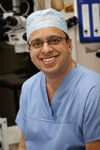
Mr A Ahmed
MB ChB, MRCS, FRCS (ORL-HNS)Mr Ahmed has trained as an ENT Surgeon with subsequent Fellowship training in Facial Plastic & Reconstructive Surgery in America and Europe.




EAFPS
European Academy Fellowship of Facial Plastic and Reconstructive Surgery
RCSEd
Fellow of the Royal College of Surgeons of Edinburgh
ENT UK
The professional membership body promoting excellence in ENT
Book my Consultation

Book a consultation now, fill in your details and we’ll call you back. Start discovering your true self today.
Our opening hours are Monday to Friday 9am-7pm.
- Get to know Mr Ahmed
- All your questions answered
- Get procedures recommendations
- Get advice on next steps
Facial Plastic Surgeon Nottingham – The Park Hospital
The Park HospitalSherwood Lodge Drive
Burntstump Country Park
NG5 8RX Find out more
Facial Plastic Surgeon Nottingham – Woodthorpe Hospital
Woodthorpe Hospital748 Mansfield Road
Nottingham
NG5 3FZ Find out more