
Lower blepharoplasty with fat repositioning
Lower blepharoplasty with fat repositioning is a surgical procedure that redistributes rather than removes the fat pads of the lower eyelid, using the fat to fill in hollows such as the tear trough. The surgeon releases the fat through a transconjunctival incision and repositions it over the orbital rim, smoothing the transition between the lower eyelid and cheek rather than simply reducing volume.
Mr Aftab Ahmed performs lower blepharoplasty with fat repositioning for patients suffering from under-eye bags, tear trough hollowing and a tired appearance in cosmetic clinics in Nottingham and Doncaster.
What is Lower Blepharoplasty with Fat Repositioning?
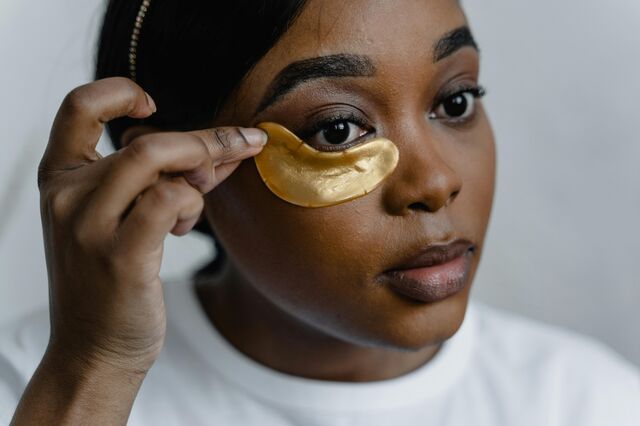
Lower blepharoplasty with fat repositioning, also known as fat transposition or arcus marginalis release blepharoplasty, is a surgical procedure in which the prolapsed lower eyelid fat is released from its compartments and repositioned over the orbital rim into the tear trough area, rather than being removed.
This approach uses the patient's own tissue to address both the bag and the hollow simultaneously, producing a result that is often more natural and longer lasting than either fat removal or filler injection alone.
How Does It Work?
- Access is gained through the inner surface of the eyelid via the transconjunctival approach, or through a lash line incision if skin work is also required
- The arcus marginalis, the attachment of the orbital septum to the orbital rim, is released
- This releases the fat and allows it to be draped forward and downward over the orbital rim
- The repositioned fat is secured in position using sutures anchored to the periosteum of the orbital rim
- The fat fills the tear trough, smoothing the transition between eyelid and cheek
- The incision is closed in the standard manner
Understanding the Tear Trough and Fat Repositioning
The tear trough is one of the most complex anatomical areas of the lower eyelid region. Its appearance is influenced by several factors:
Factor
Effect on Tear Trough Appearance
Fat prolapse above
Creates a shadow that deepens the apparent hollow
Volume loss in tear trough
Actual depression becomes visible with ageing
Skin thinning
Makes the depression more visible
Midface descent
Pulls tissue downward, deepening the trough
Fat repositioning addresses the first two of these factors directly, making it the most appropriate surgical option for patients where both prolapse and hollowing are present.
The Surgical Tools Used
Access and Arcus Marginalis Release
- Loupe magnification for precise dissection at the orbital rim
- Fine scissors or Colorado needle for releasing the arcus marginalis cleanly
- Eyelid retractors to maintain access and protect the globe
Fat Mobilisation
- Fine scissors for releasing the fat from its compartments while keeping it attached to its vascular supply
- Gentle tissue handling to preserve the blood supply of the repositioned fat, ensuring it survives in its new position
- Bipolar diathermy for haemostasis without thermal damage to the fat being preserved
Fixation of Repositioned Fat
- Fine absorbable sutures to secure the repositioned fat to the periosteum of the orbital rim
- The fat is sutured at multiple points to ensure it lies flat and smooth without bunching
- The amount fixed at each point is assessed visually to ensure symmetry
Is Lower Blepharoplasty with Fat Repositioning Right for You?
Who Makes a Good Candidate?
- Patients with a visible fat bag combined with a tear trough hollow or depression beneath it
- Those who look worse in certain lighting due to the shadow cast by the combination of bag and hollow
- Patients who have previously had filler in the tear trough and found it helped but want a more permanent solution
- Men and women who want a natural, smooth lower eyelid contour that addresses both problems at once
What to Expect: Recovery Week by Week
Days 1 to 3: Immediate Recovery
- Swelling and bruising around the eyes, typically slightly more than with fat removal alone due to the arcus marginalis release
- Cold compresses and head elevation are essential
- Lubricating eye drops as directed
- Rest and minimal activity
Days 4 to 7: Early Progress
- Bruising and swelling begin to reduce
- The initial improvement in lower eyelid contour becomes visible, though significant swelling remains
- Sutures removed if the transcutaneous approach was used
Week 2: Returning to Normal
- Most patients return to work and light social activities
- Makeup can be applied from around day ten
- The lower eyelid begins to look significantly more rested
Weeks 3 to 4: Resuming Daily Life
- Light exercise can be reintroduced
- The repositioned fat continues to settle into its new position
- The transition between eyelid and cheek becomes smoother
Months 2 to 6: Final Results
- The repositioned fat has fully integrated and the result is stable
- The smooth lower eyelid to cheek transition is clearly established
- The tear trough hollow is filled and the bag is resolved
Clinical Outcomes: What to Expect Long Term
- Permanence: The repositioned fat integrates with the tissue of the tear trough and provides a lasting correction without the need for repeat treatment
- Natural appearance: Using the patient's own tissue rather than filler produces a result that feels and looks entirely natural
- Bag resolution: The prolapse is addressed at the same time as the hollow, treating both components of the problem in one procedure
- Satisfaction: Among the highest of any lower blepharoplasty technique in patients with the appropriate presentation
Potential Risks and Considerations
Common and Temporary
- Swelling and bruising, slightly more than with fat removal only
- Temporary dry eye or altered tear production
- A small lump or firmness at the orbital rim as the repositioned fat integrates
Less Common Risks
- Asymmetry if fat is repositioned in unequal volumes on each side
- Residual hollowing if the repositioned fat volume is insufficient
- Fat necrosis if the blood supply to the repositioned fat is compromised during handling
Rare Risks
- Damage to the inferior oblique muscle during arcus marginalis release
- Haematoma within the orbit
Fat repositioning lower blepharoplasty is the most anatomically precise approach to the combination of lower eyelid bags and tear trough hollowing. By using the patient's own tissue, it solves both problems at once with results that are natural, lasting, and free from the limitations of injectable treatments.
Do your eyes look tired because of bags and hollows beneath them? Book a consultation to find out if fat repositioning blepharoplasty is the right solution.

Mr A Ahmed
MB ChB, MRCS, FRCS (ORL-HNS)Mr Ahmed has trained as an ENT Surgeon with subsequent Fellowship training in Facial Plastic & Reconstructive Surgery in America and Europe.




EAFPS
European Academy Fellowship of Facial Plastic and Reconstructive Surgery
RCSEd
Fellow of the Royal College of Surgeons of Edinburgh
ENT UK
The professional membership body promoting excellence in ENT
Book my Consultation

Book a consultation now, fill in your details and we’ll call you back. Start discovering your true self today.
Our opening hours are Monday to Friday 9am-7pm.
- Get to know Mr Ahmed
- All your questions answered
- Get procedures recommendations
- Get advice on next steps
Facial Plastic Surgeon Nottingham – The Park Hospital
The Park HospitalSherwood Lodge Drive
Burntstump Country Park
NG5 8RX Find out more
Facial Plastic Surgeon Nottingham – Woodthorpe Hospital
Woodthorpe Hospital748 Mansfield Road
Nottingham
NG5 3FZ Find out more