
Transcutaneous Lower Blepharoplasty
Transcutaneous lower blepharoplasty is a surgical procedure that addresses loose or crepey skin, fine lines and reduced muscle tone in the lower eyelid, in addition to puffiness caused by fat prolapse.
Mr Aftab Ahmed performs transcutaneous lower blepharoplasty for patients with loose or crepey skin, fine lines, and reduced muscle tone in cosmetic clinics in Nottingham and Doncaster.
What is Transcutaneous Lower Blepharoplasty?
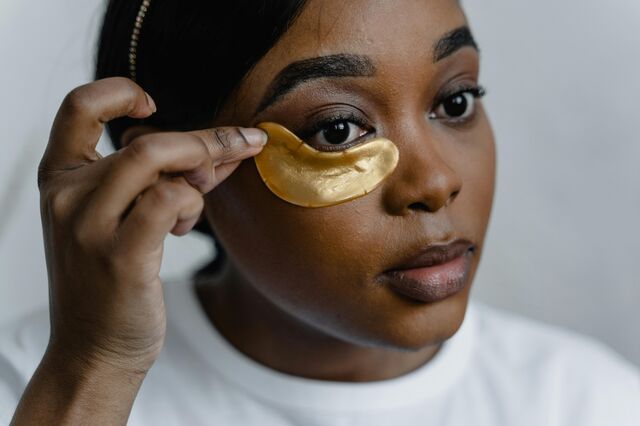
Transcutaneous lower blepharoplasty is a surgical procedure that accesses the lower eyelid through an external incision placed just below the lower lash line, typically within one to two millimetres of the lash margin. This incision allows the surgeon to work on the skin, orbicularis oculi muscle, orbital septum, and fat compartments through a single well-concealed access point.
It is the most comprehensive approach to lower eyelid rejuvenation, addressing all layers where the transconjunctival approach addresses fat alone.
How Does It Work?
- A fine incision is made just below the lower lash line, extending slightly beyond the outer corner of the eye if needed
- The skin is elevated as a flap, exposing the orbicularis oculi muscle beneath
- The muscle is either preserved and tightened or a small amount is removed depending on the degree of laxity
- The orbital septum is opened to access the fat compartments beneath
- Fat is removed, repositioned, or a combination of both
- Excess skin is carefully measured and removed with conservative precision
- The incision is closed with fine sutures that are removed at five to seven days
What the Transcutaneous Approach Addresses
Concern
Can Transcutaneous Address It?
Prolapsed lower eyelid fat
Yes
Loose or excess lower eyelid skin
Yes
Crepey or wrinkled skin beneath the eye
Yes
Orbicularis muscle laxity
Yes
Tear trough depression
Yes, through fat repositioning
Poor lower eyelid tone
Partially, with canthopexy if needed
Dark circles from pigmentation
No
The Critical Importance of Conservative Skin Removal
One of the most important principles in transcutaneous lower blepharoplasty is the conservative removal of skin. The lower eyelid has very little redundancy, and removing too much skin creates a condition called lower eyelid retraction, where the lid is pulled downward away from the eye.
To prevent this:
- Skin is assessed with the patient looking upward and the mouth open, which places maximum tension on the lower lid
- Only the amount of skin that falls away naturally in this position is considered for removal
- In patients with lower lid laxity, a canthopexy or canthoplasty is performed to support the lid before skin is removed
- Err on the side of removing less rather than more, as secondary skin removal is always possible but correcting retraction is complex
The Surgical Tools Used
Incision and Skin Management
- Fine scalpel or Colorado needle for the lash line incision
- Skin hooks for elevating the skin flap without crushing
- Fine scissors for precise skin dissection and measurement before removal
- Callipers to measure the skin ellipse symmetrically on both sides
Muscle and Septum Work
- Scissors for opening the orbicularis and orbital septum
Fat Management
- Bipolar diathermy for haemostasis within the muscle layer
- Fine sutures for muscle tightening or imbrication where laxity is present
- Fine scissors for opening individual fat compartments
- Monopolar cautery for fat coagulation and removal
- Sutures for fat repositioning over the orbital rim in patients with tear trough depression
Closure
- Fine non-absorbable sutures at the lash line, removed at five to seven days
- Skin closure strips as an adjunct to support healing and reduce tension
Is Transcutaneous Lower Blepharoplasty Right for You?
Who Makes a Good Candidate?
- Men and women with loose or crepey lower eyelid skin alongside fat prolapse
- Patients typically in their forties, fifties, and beyond, where skin laxity is a significant component
- Those with orbicularis muscle laxity contributing to a rounded or loose lower eyelid border
- Patients who have been assessed and found to have good lower eyelid tone, or who require a canthopexy to augment this
The Snap Test
Before surgery, lower eyelid tone is assessed using the snap test. The lower lid is gently pulled downward and released:
- Quick return: Good tone, transcutaneous approach is appropriate
- Slow return requiring a blink: Reduced tone, canthopexy should be performed concurrently
- Very poor return: Significant laxity, canthoplasty may be required
What to Expect: Recovery Week by Week
Days 1 to 3: Immediate Recovery
- Bruising and swelling around the eyes, typically peaking in the first 48 hours
- Cold compresses applied gently reduce bruising
- Head elevation during sleep is essential
- Eye lubricating drops or ointment as directed
Days 4 to 7: Early Progress
- Bruising begins to yellow and fade
- Swelling reduces progressively
- Lash line sutures are removed at five to seven days
- The lash line incision begins to settle and become less noticeable
Week 2: Returning to Normal
- Most patients return to work and social activities during this period
- Makeup can be applied to the lash line area from around day ten
- The lower eyelid contour continues to improve as swelling resolves
Weeks 3 to 4: Resuming Daily Life
- Light exercise can be reintroduced
- The lower eyelid feels increasingly natural
- Any tightness along the lash line gradually eases
Months 2 to 6: Final Results and Scar Maturation
- Full resolution of swelling is complete
- The lash line scar matures from a fine pink line to a barely visible mark
- In most patients, the scar becomes imperceptible within the lash margin within six months
Clinical Outcomes: What to Expect Long Term
- Longevity: Results are stable for ten or more years, with the skin removal component providing lasting improvement in lower eyelid skin quality
- Scar outcomes: The lash line incision heals reliably well in most patients, becoming difficult to detect with time
- Comprehensive improvement: Addresses all layers of lower eyelid ageing that the transconjunctival approach cannot reach
- Satisfaction: High in patients correctly selected based on the presence of skin laxity
Potential Risks and Considerations
Common and Temporary
- Bruising and swelling, typically more than with the transconjunctival approach
- Temporary dry eye symptoms
- Mild chemosis of the conjunctiva
Less Common Risks
- Lower eyelid retraction if too much skin is removed, the most significant risk of this technique
- Ectropion if lid tone is not adequately assessed and supported
- Visible lash line scarring if healing is less predictable
Rare Risks
- Persistent lower eyelid malposition requiring revision
- Damage to the eye, extremely rare with experienced surgical technique
- Haematoma within the orbit
Financial Considerations
- Eye drops and lubricating ointments during recovery
- Time off work, typically one to two weeks
- Scar management products if the lash line incision requires additional care
- Follow-up appointments to monitor eyelid position
The transcutaneous approach remains the most comprehensive technique for lower eyelid rejuvenation in patients with skin laxity. When planned conservatively and executed with precision, it delivers a result that is thorough, natural, and lasting.
Concerned about loose skin and puffiness beneath your eyes? Book a consultation to find out whether transcutaneous lower blepharoplasty is right for you.

Mr A Ahmed
MB ChB, MRCS, FRCS (ORL-HNS)Mr Ahmed has trained as an ENT Surgeon with subsequent Fellowship training in Facial Plastic & Reconstructive Surgery in America and Europe.




EAFPS
European Academy Fellowship of Facial Plastic and Reconstructive Surgery
RCSEd
Fellow of the Royal College of Surgeons of Edinburgh
ENT UK
The professional membership body promoting excellence in ENT
Book my Consultation

Book a consultation now, fill in your details and we’ll call you back. Start discovering your true self today.
Our opening hours are Monday to Friday 9am-7pm.
- Get to know Mr Ahmed
- All your questions answered
- Get procedures recommendations
- Get advice on next steps
Facial Plastic Surgeon Nottingham – The Park Hospital
The Park HospitalSherwood Lodge Drive
Burntstump Country Park
NG5 8RX Find out more
Facial Plastic Surgeon Nottingham – Woodthorpe Hospital
Woodthorpe Hospital748 Mansfield Road
Nottingham
NG5 3FZ Find out more