
Augmentation Rhinoplasty
Augmentation rhinoplasty is a surgical procedure that adds volume and height to the nose, most often the bridge, using cartilage grafted from the patient's own septum, ear or rib. It is used for patients with a naturally low or flat nasal bridge, or for those needing structural support following previous surgery or trauma.
Mr Aftab Ahmed performs augmentation rhinoplasty for patients suffering from a low or flat nasal bridge and reduced nasal projection in cosmetic clinics in Nottingham and Doncaster.
What is Augmentation Rhinoplasty?
Augmentation rhinoplasty is a surgical procedure that uses bone or cartilage from the patient's own body or from other carefully considered sources to increase the height, projection, or structural integrity of the nose. Unlike reduction rhinoplasty, which reshapes by removal, nasal augmentation works by carefully adding to the existing nasal framework to achieve a more balanced appearance in proportion with the patient's other facial features.
The procedure addresses both cosmetic reasons and functional concerns. A flat nasal dorsum or collapsed nasal bridge can compromise airflow as well as appearance, meaning augmentation rhinoplasty often improves breathing difficulties at the same time as reshaping the nose. For patients who feel self-conscious about a flat, underprojected, or structurally deficient nose, this surgical procedure can significantly impact confidence and quality of life.
Who Needs Augmentation Rhinoplasty?
Augmentation rhinoplasty is indicated across a broad range of presentations. Understanding which category applies helps patients recognise whether nasal augmentation is the right approach for their concerns.
Congenital Low Dorsum
Some patients are born with a naturally flat or underprojected nasal bridge, a low nasal dorsum that lacks height relative to the rest of the face. This is particularly common in patients of East Asian, South-East Asian, and West African heritage, where the nasal anatomy typically features a lower dorsum, wider base, and thicker overlying skin. Augmentation rhinoplasty raises the nasal bridge to create a more balanced appearance and improved overall facial harmony, while preserving the patient's natural identity.
Saddle Nose Deformity
Saddle nose deformity describes a collapse or depression of the nasal dorsum, giving the nose a concave profile when viewed from the side. It can result from nasal trauma, previous rhinoplasty surgery, infection, septal perforation, or autoimmune conditions such as Wegener's granulomatosis or relapsing polychondritis. The functional consequences are significant; middle vault collapse leads to internal nasal valve incompetence, nasal airway obstruction, and sometimes breathing difficulties. Augmentation rhinoplasty in these cases addresses both form and function, with the complexity of the nasal reconstruction determined by the severity of the deformity.
Post-Rhinoplasty Over-Resection
A common driver of revision rhinoplasty, over-resection occurs when too much cartilage or bone is removed during a previous rhinoplasty procedure, leaving the nose structurally deficient. The nasal bridge may appear scooped or pinched, the nasal tip may lose support and droop, and breathing problems can develop where internal structures have been weakened. Augmentation rhinoplasty restores the lost nasal structure in these cases, though revision surgery of this nature is technically demanding and requires careful planning.
Trauma
Nasal fractures and injuries that result in structural loss, rather than simply displaced nasal bones, may require augmentation as part of nasal reconstruction. Where underlying bone or cartilage has been lost or resorbed following injury, rebuilding the nasal framework through augmentation achieves both a natural appearance and restored function.
Augmentation Rhinoplasty vs Reduction Rhinoplasty
While both are forms of nose surgery, augmentation and reduction rhinoplasty represent fundamentally different surgical objectives and require different skill sets and planning.
Reduction rhinoplasty, the conventional nose job, involves removing bone or cartilage to reduce a dorsal hump, narrow wide nasal bones, or refine an overprojected nasal tip. It works by subtraction. Augmentation rhinoplasty works by addition, building up areas of deficiency using carefully sourced cartilage or other materials to improve the shape of the nose, raise the nasal bridge, and restore structural integrity.
In some cases, both approaches are combined within a single rhinoplasty procedure, for example, reducing width at the base while augmenting dorsal height, or refining the nasal tip while rebuilding a collapsed nasal dorsum. The surgical plan is always determined by the patient's individual nasal anatomy and the outcome they are seeking.
Graft Material Options
One of the most consequential decisions in augmentation rhinoplasty is the choice of graft material. This decision depends on the degree of augmentation required, the patient's nasal anatomy and skin quality, whether previous rhinoplasty has already harvested available cartilage, and the relative risks and benefits of each option. Mr Ahmed will discuss this in detail during your consultation.
Autologous Cartilage
Autologous grafts, cartilage taken from the patient's own body, are considered the gold standard in nasal augmentation due to their biocompatibility, integration with surrounding tissue, and long-term durability. There is no risk of rejection, and the body accepts the graft as its own nasal cartilage.
Septal Cartilage
Septal cartilage, harvested from within the nose itself, is the first-choice donor site for smaller augmentations. It is strong, flat, and easily shaped, and its harvest requires no additional surgical site beyond the nose. However, the amount of available septal cartilage is limited, and in patients who have had previous rhinoplasty, septal cartilage may already have been used or reduced. Where the septum is deviated, septal cartilage harvest can be combined with septoplasty to address breathing difficulties at the same time.
Ear Cartilage
Ear cartilage, harvested through small incisions behind the ear with no visible scars on the front of the ear, provides a useful source of softer cartilage suitable for nasal tip refinement and smaller augmentations. It is naturally curved, which can be advantageous for tip grafting, though its softness makes it less suitable for significant dorsal height gain. Ear cartilage harvest is a straightforward procedure with minimal impact on the ear's appearance or function.
Rib Cartilage
Costal cartilage, rib cartilage harvested from the chest wall through small incisions, provides the largest volume of available cartilage and is the preferred graft for significant nasal augmentation, saddle nose reconstruction, and complex revision rhinoplasty where other cartilage sources have been exhausted. It is strong enough to provide meaningful dorsal height and structural support. The primary considerations are the additional surgical site, a small risk of chest infection or chest discomfort during recovery, and the tendency of solid costal cartilage blocks to warp, which is why diced cartilage wrapped in temporal fascia is often used to overcome this in patients with thinner skin, where an irregular surface would show through.
Silicone Implants
Silicone implants offer a reliable, readily available option for dorsal augmentation, particularly in Asian rhinoplasty, where they have been used extensively for decades. The risks specific to silicone implants include infection at the surgical site, implant migration, and, in rare cases, extrusion through the skin, risks that are substantially mitigated by careful patient selection, precise surgical technique, and appropriate implant sizing. Where a patient's skin is thin or the nasal dorsum has little soft tissue coverage, autologous grafts are generally preferred.
Combined Approach
In many augmentation rhinoplasty cases, a combination of materials is used, most commonly a silicone dorsal implant for bridge height combined with autologous cartilage grafts for nasal tip refinement and definition. This hybrid approach leverages the predictability of implant augmentation for the dorsum while using the patient's own cartilage where precision and tissue integration matter most.
Augmentation Rhinoplasty for Saddle Nose Deformity
Saddle nose deformity represents one of the most demanding indications for augmentation rhinoplasty, and the surgical approach must be matched carefully to the severity of the collapse.
Mild saddle nose, where the nasal dorsum shows slight depression but the nasal structure remains broadly intact, may require only dorsal augmentation or camouflage grafting to restore a natural appearance. Moderate and severe deformities, however, involve significant structural loss across the nasal bridge and middle vault, and require full structural nasal reconstruction, rebuilding at three levels: internal lining to support airflow, structural bone or cartilage framework to restore shape, and soft tissue coverage.
In these cases, autologous grafts are the gold standard for nasal reconstruction. Rib cartilage is most commonly selected for moderate to severe saddle nose, given the volume of material required, with its capacity to rebuild the nasal dorsum and restore both the shape of the nose and also the nostrils and tip, where collapse has been more extensive. Both functional and cosmetic goals are addressed within the same surgical procedure, with breathing problems and nasal airway obstruction resolved alongside aesthetic restoration.
Augmentation Rhinoplasty for Ethnic Patients
Augmentation rhinoplasty is the most common form of nose surgery globally, driven largely by demand from patients of Asian, Middle Eastern, and African heritage, for whom a flat or underprojected nasal bridge is a natural anatomical characteristic rather than a consequence of trauma or previous surgery.
The surgical considerations in ethnic nasal augmentation are distinct. Thicker skin reduces the visibility of surface detail, meaning the underlying nasal structure must be built with greater precision to translate through the soft tissue envelope. Weaker nasal cartilage means that tip support and structural grafting are often needed alongside dorsal augmentation. The goal is always a balanced appearance that respects and complements the patient's facial features and ethnic identity, not a wholesale transformation of the nose toward a different ethnic ideal.
In selected patients, augmentation rhinoplasty can be combined with centrofacial lipofilling, a technique that addresses the surrounding facial structure alongside the nose, achieving harmonious aesthetic outcomes that improve overall facial balance rather than treating the nose in isolation. Mr Ahmed will advise whether this combined approach is appropriate during your consultation.
Augmentation Rhinoplasty as Revision Surgery
For patients whose previous rhinoplasty removed too much cartilage or bone, leaving the nose looking over-operated, pinched, or structurally deficient, augmentation rhinoplasty as revision surgery offers the opportunity to restore what has been lost. This is one of the most technically challenging forms of nose surgery, for several reasons.
Scar tissue from previous surgery alters the tissue planes, reduces skin elasticity, and complicates graft placement. Septal cartilage may have already been partially or fully harvested during the primary rhinoplasty, meaning further surgery requires ear cartilage or, more often, rib cartilage as the primary graft source. The risk of visible scars, an altered sense of the nasal skin, and the complexity of working within a previously operated surgical site all make thorough consultation and careful surgical planning particularly important in revision augmentation cases.
Mr Ahmed advises patients to allow at least twelve months following their previous rhinoplasty before pursuing revision surgery, to ensure the healing process is complete and the nasal structure has fully stabilised before further intervention.
The Surgical Technique
Augmentation rhinoplasty is performed under general anaesthesia and typically takes between one and a half and three hours, depending on the complexity of the work and the graft source selected.
Open Rhinoplasty
Open rhinoplasty is the preferred approach for most augmentation procedures, particularly where significant dorsal height gain, nasal tip work, or complex nasal reconstruction is required. A small incision is made across the columella, providing the surgeon with full visibility of the nasal framework and allowing precise graft placement and fixation. The columellar scar is small, heals well, and is not visible from the front.
Closed Rhinoplasty
Closed rhinoplasty, performed entirely through the nostrils with no external incision, is suitable for more limited augmentations where access and visibility requirements are less demanding. It leaves no visible scars externally and typically involves a slightly more comfortable early recovery.
Graft Harvest and Placement
Where septal cartilage is used, it is harvested through the same internal approach as the rhinoplasty itself. Ear cartilage is accessed through small incisions behind the ear. Rib cartilage requires a separate small incision at the chest wall, either at the inframammary fold or over the relevant rib and is performed as part of the same surgical procedure rather than as a separate operation in most cases. Grafts are carefully shaped, sized, and secured within the nasal structure to achieve the planned result.
Who is a Good Candidate for Augmentation Rhinoplasty?
Ideal candidates for augmentation rhinoplasty include patients who:
- Have a flat, underprojected, or structurally deficient nasal bridge
- Present with a saddle nose deformity affecting appearance, breathing, or both
- Have experienced over-resection following previous rhinoplasty
- Are seeking primary rhinoplasty to build dorsal height or improve nasal tip projection
- Are in good general health with no medical conditions that would increase surgical risk
- Have realistic expectations about what augmentation rhinoplasty can and cannot achieve
- Are non-smokers, or willing to stop smoking well in advance of surgery, to support the healing process
Augmentation rhinoplasty may be less suitable for patients with very thin skin and limited soft tissue coverage, where implant edges or graft irregularities are more likely to become visible, or for those with active infection, significant medical conditions, or unrealistic expectations about the outcome. All of this is assessed in detail at your thorough consultation.
The Consultation Process
Your consultation with Mr Ahmed is the essential first step in planning your augmentation rhinoplasty. Because the procedure is so dependent on the individual patient's nasal anatomy, skin quality, and existing cartilage availability, no treatment plan can be agreed upon without a detailed in-person assessment.
During your consultation, Mr Ahmed will:
- Assess the shape, height, and structural integrity of your nasal bridge and nasal dorsum
- Evaluate skin thickness and skin elasticity across the nose
- Examine available septal cartilage and discuss graft material options
- Review your nasal anatomy, including the nasal tip, nasal bones, and upper lip relationship
- Discuss any breathing difficulties or functional concerns
- Review your medical history, previous rhinoplasty if applicable, and any relevant medical conditions
- Outline a personalised treatment plan, including graft selection and surgical approach
- Set realistic expectations for your result and the healing process
Procedure and Recovery Timeline
Recovery following augmentation rhinoplasty follows a similar pattern to other forms of rhinoplasty surgery, with the addition of donor site recovery where rib cartilage has been harvested.
The table below highlights the recovery timeline for augmentation rhinoplasty.
Phase
Timeframe
What to Expect
Initial Healing
First week
A splint supports the nose. Swelling and bruising are expected, though generally less pronounced than following reduction rhinoplasty. Where rib cartilage has been harvested, some chest discomfort is normal at the donor site.
Early Recovery
Weeks 2–4
Most patients return to normal activities. Swelling continues to reduce. The new shape of the nose begins to emerge, though final definition takes time.
Intermediate
Months 3–6
The nose settles progressively. Grafts integrate, and the nasal structure stabilises. Cartilage grafts from the rib may take slightly longer to fully settle than septal or ear cartilage.
Final Result
12–18 months
The final result is fully apparent as all residual swelling resolves. Augmentation results are long-lasting, particularly where autologous grafts have been used.
During your recovery:
- Keep the head elevated, particularly in the first week, to manage swelling
- Avoid strenuous exercise for four to six weeks
- Avoid contact sports until cleared by your surgeon
- Avoid hot baths and direct sun exposure on the surgical site during early healing
- Use a clean handkerchief rather than blowing the nose forcefully in the early weeks
- Attend all follow-up appointments to monitor healing progress
Risks and Potential Complications
Augmentation rhinoplasty carries certain risks, as with any surgical procedure. These are minimised by careful patient selection, appropriate graft material choice, and the experience of your surgeon, but patients should have a clear understanding of potential complications before proceeding.
General surgical risks include:
- Minor bleeding or, in rare cases, heavy bleeding
- Infection at the surgical site or donor site
- Blood clot formation
- Altered sense of the nasal skin or nasal tip, usually temporary
- Visible scars, though these are typically minimal and well-concealed
Augmentation-specific risks include:
- Graft warping, particularly with solid costal cartilage in patients with thinner skin; mitigated through diced cartilage techniques
- Implant-related risks where silicone is used: infection, migration, or in rare cases, extrusion
- Chest infection or discomfort at the rib cartilage donor site, uncommon but should be discussed
- Graft resorption or movement during the healing process
- In rare cases, further surgery or revision rhinoplasty may be needed to refine or correct the result
There is always a small risk of complications with any nose surgery. A thorough consultation and careful surgical planning reduce these risks substantially.
Long-Term Results and Considerations
Augmentation rhinoplasty delivers long-lasting results, particularly where autologous grafts have been used. Once integrated, the patient's own cartilage becomes part of the nasal structure permanently, with no risk of migration or long-term material changes associated with synthetic implants. Costal cartilage, once fully settled, which takes slightly longer than septal or ear cartilage, is among the most durable graft materials available in nose surgery.
The final result is fully apparent at twelve to eighteen months, once all residual swelling has resolved and the grafted material has fully integrated into the surrounding nasal structure. Patients are encouraged to be patient during this period, as the shape continues to refine progressively throughout the healing process rather than changing dramatically after the initial recovery.
In cases where a silicone implant has been used, long-term monitoring is advisable, and patients should be aware that implant revision surgery may be required at some point in the future, though the large retrospective data sets suggest this is uncommon in well-selected patients managed by an experienced surgeon.
Restoring Balance, Structure, and Confidence
Augmentation rhinoplasty is one of the most common plastic surgeries performed worldwide, and for good reason. For patients whose nose lacks the height, structure, or proportion that their facial features call for, it offers a meaningful and lasting improvement: a new nose built with the patient's own tissue, shaped to complement their individual anatomy, and designed to look entirely natural.
Whether you are seeking augmentation for a congenital low dorsum, a saddle nose deformity, the aftermath of previous rhinoplasty, or simply a nose that feels more in keeping with your face, Mr Aftab Ahmed's approach is built around precision, evidence, and a thorough understanding of nasal anatomy. The goal is always a balanced appearance that feels like your own.
To arrange your consultation in Nottingham or Doncaster, please contact the practice.
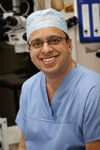
Mr A Ahmed
MB ChB, MRCS, FRCS (ORL-HNS)Mr Ahmed has trained as an ENT Surgeon with subsequent Fellowship training in Facial Plastic & Reconstructive Surgery in America and Europe.




EAFPS
European Academy Fellowship of Facial Plastic and Reconstructive Surgery
RCSEd
Fellow of the Royal College of Surgeons of Edinburgh
ENT UK
The professional membership body promoting excellence in ENT
Book my Consultation

Book a consultation now, fill in your details and we’ll call you back. Start discovering your true self today.
Our opening hours are Monday to Friday 9am-7pm.
- Get to know Mr Ahmed
- All your questions answered
- Get procedures recommendations
- Get advice on next steps
Facial Plastic Surgeon Nottingham – The Park Hospital
The Park HospitalSherwood Lodge Drive
Burntstump Country Park
NG5 8RX Find out more
Facial Plastic Surgeon Nottingham – Woodthorpe Hospital
Woodthorpe Hospital748 Mansfield Road
Nottingham
NG5 3FZ Find out more