Closed Rhinoplasty
Closed rhinoplasty is a surgical procedure that reshapes the nose entirely through incisions hidden inside the nostrils, leaving no external scar. This approach is used for more limited or precise changes, such as smoothing a dorsal hump or refining the tip, where the surgeon does not need the fuller exposure of an open approach to achieve the desired result.
Mr Aftab Ahmed performs closed rhinoplasty for patients suffering from a dorsal hump, a bulbous or drooping tip and mild nasal asymmetry in cosmetic clinics in Nottingham and Doncaster.
What is the Endonasal (Closed) Technique?
Closed rhinoplasty is defined by its restrictive yet highly precise access. Unlike the open method, where the nasal skin is fully elevated, the closed technique involves performing the entire procedure through the nostrils.
By utilising internal marginal incisions, Mr Ahmed can access the nasal bridge and tip cartilages from within. This ensures that the outer skin remains undisturbed, protecting the natural contours of the nose and ensuring that all surgical marks are hidden within the nasal lining.
Why is the Closed Approach Highly Valued?
The popularity of the closed technique stems from its "minimally disruptive" nature. Mr Ahmed advocates for this method in specific cases because it aligns with a preservation-focused philosophy:
- The "Invisible Scar" Promise: Because every incision is tucked inside the nostril, there is zero external scarring. This is the primary driver for patients who are concerned about the "tell-tale" mark of a transcolumellar incision.
- The Recovery Speed Advantage: This technique preserves the natural bridge of skin and the majority of the nose’s lymphatic drainage. Consequently, patients often experience significantly less post-operative oedema (swelling) and a much faster resolution of bruising than with open surgery.
- The Limitation Clause (Expert Transparency): It is important to acknowledge that the closed approach provides the surgeon with a "limited window." Mr Ahmed effectively utilises this for refining the bridge or making minor tip adjustments. However, if your goals require significant structural rebuilding or complex revision work, he will honestly advise if an Open approach is necessary to guarantee a stable, long-term result.
Who is a Candidate for Closed Surgery?
This internal approach is particularly successful for patients with specific aesthetic goals, such as:
- Dorsal Hump Smoothing: Polishing away a prominent "bump" to create a straighter or more gently sloped profile.
- Bridge Narrowing: Tapering a wide nasal bridge to better fit the width of the face.
- Refining the Silhouette: Enhancing the side profile without changing the fundamental character of the nasal tip.
- First-Time Refinement: Patients with healthy, unoperated tissue who require targeted adjustments rather than a total reconstruction.
Your Consultation in Nottingham & Doncaster
A successful outcome begins with a professional assessment at Park Hill Hospital (Doncaster), The Park Hospital, or Woodthorpe Hospital (Nottingham).
- Anatomical Mapping: Mr Ahmed evaluates your skin elasticity and the strength of your nasal bridge to confirm that the endonasal route is appropriate for your goals.
- Airway Assessment: We never sacrifice function for fashion. Mr Ahmed checks for internal obstructions to ensure your breathing remains optimal or is even improved.
- Outcome Planning: Through high-resolution photography, we discuss the "less is more" philosophy of closed surgery, ensuring your expectations are met with clinical realism.
The Closed Procedure: A Step-by-Step Guide
Mr Ahmed employs a high level of tactile precision during the closed procedure, reshapping the nose through internal pathways.
- Clinical Setup: Surgery is performed under general anaesthesia at our state-of-the-art regional hospitals for your safety.
- Endonasal Access: Precise incisions are hidden inside the nostrils, providing access to the framework without external cuts.
- Elevation: Using specialized periosteal elevators, Mr Ahmed creates a small pocket of space between the skin and the bone.
- Sculpting the Framework:
- The Profile: Using a diamond rasp or a delicate osteotome, Mr Ahmed gently polishes the nasal bridge to the desired height.
- The Tip: Small, targeted adjustments are made to the tip cartilage using fine-point forceps to achieve subtle narrowing.
- Internal Support: If needed, minor internal grafts are placed to ensure the nasal valves remain open and supported.
- Rapid-Heal Closure: The incisions are closed with dissolvable stitches. Because these are in a moist internal environment, they heal very quickly and require no post-operative removal.
What Can Closed Rhinoplasty Change? A Nasal Anatomy Guide
While the open approach is often used for major reconstructions, closed rhinoplasty is remarkably effective for refining specific aesthetic details. By working entirely through internal incisions, Mr Ahmed can subtly reshape the following areas to create a more balanced, harmonious appearance:
The Bridge (Nasal Bones): This is one of the most common focus areas for closed surgery. Mr Ahmed can smooth away a prominent "dorsal hump" or gently narrow the upper third of the nose to create a sleeker, more refined bridge.
The Dorsum (Nasal Profile Line): Closed rhinoplasty is the gold standard for profile balancing. It allows for the precise lowering or straightening of the nasal line from the bridge down to the tip, resulting in a classic, elegant silhouette.
The Nasal Tip (Subtle Definition): While limited compared to the open approach, the closed technique allows for "tip-plasty" to address minor concerns. This includes subtle narrowing or slightly lifting a drooping tip to enhance the "break" between the bridge and the end of the nose.
The Septum (Internal Airway): Even in a "scarless" procedure, the internal septum can be straightened. This addresses functional breathing issues (deviated septum) while providing a stable foundation for the new nasal shape.
The Supratip Area: This is the area just above the tip. Mr Ahmed can refine this region to ensure a smooth transition from the bridge to the tip, avoiding a "polly-beak" deformity and ensuring a natural look.
The Nasolabial Angle: By making minor internal adjustments, the angle between the nose and the upper lip can be slightly rotated. This can make the face appear more youthful and the profile more balanced.
Understanding Your Recovery Timeline
One of the greatest benefits of the "closed" method is the accelerated healing period.
The below table shows a recover timeline of closed rhinoplasty.
Phase
Duration
The Healing Experience
Immediate
Days 1–5
A small splint is applied to the bridge. Most patients find they have very little bruising around the eyes.
The Splint Removal
Day 7
Your splint is removed at our clinic. The new profile is visible immediately, with minimal external trauma.
Back to Life
Days 7–10
Most patients feel ready to return to work during this window.
The Settling Phase
Months 1–3
Swelling resolves much faster than open surgery; your "final" look emerges earlier.
Full Maturation
6–9 Months
The internal tissues fully integrate, and the bridge reaches its final, refined state.
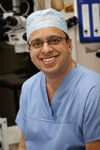
Mr A Ahmed
MB ChB, MRCS, FRCS (ORL-HNS)Mr Ahmed has trained as an ENT Surgeon with subsequent Fellowship training in Facial Plastic & Reconstructive Surgery in America and Europe.




EAFPS
European Academy Fellowship of Facial Plastic and Reconstructive Surgery
RCSEd
Fellow of the Royal College of Surgeons of Edinburgh
ENT UK
The professional membership body promoting excellence in ENT
Book my Consultation

Book a consultation now, fill in your details and we’ll call you back. Start discovering your true self today.
Our opening hours are Monday to Friday 9am-7pm.
- Get to know Mr Ahmed
- All your questions answered
- Get procedures recommendations
- Get advice on next steps
Facial Plastic Surgeon Nottingham – The Park Hospital
The Park HospitalSherwood Lodge Drive
Burntstump Country Park
NG5 8RX Find out more
Facial Plastic Surgeon Nottingham – Woodthorpe Hospital
Woodthorpe Hospital748 Mansfield Road
Nottingham
NG5 3FZ Find out more