
Ethnic Rhinoplasty
Ethnic Rhinoplasty is a surgical procedure adapted to the nasal anatomy and skin characteristics common to African, Asian, Middle Eastern and Hispanic patients, such as thicker skin, a lower nasal bridge, or a wider tip. The surgeon tailors the technique to refine and reshape the nose while preserving features that suit the patient's ethnic background and the balance of the rest of their face.
Mr Aftab Ahmed performs ethnic rhinoplasty for patients suffering from a low nasal bridge, a wide or bulbous tip and thick nasal skin in cosmetic clinics in Nottingham and Doncaster.
What is Ethnic Rhinoplasty?
Ethnic rhinoplasty is a bespoke surgical category designed for patients of Asian, African, Middle Eastern, and Hispanic/Latino descent. Unlike traditional rhinoplasty, which often focuses on removing tissue to reduce a hump, ethnic rhinoplasty frequently emphasises augmentation, adding structure, height, and definition where it is naturally lacking.
The philosophical foundation of Mr Ahmed’s approach is Refinement, not Erasure. By using advanced grafting techniques, he enhances the nasal framework while strictly protecting the ethnic markers that define your identity.
The Anatomical Landscape: Understanding Your Unique Features
Every ethnic group possesses distinct nasal characteristics shaped by thousands of years of evolution. Mr Ahmed tailors his technique to these specific archetypes:
- Asian & African Noses: Typically characterised by a lower nasal bridge and wider nostrils. The skin is often thicker, requiring strong internal "scaffolding" to create visible definition at the tip.
- Middle Eastern Noses: Often present with a prominent dorsal hump and a "plunging" tip. These cases require "tension nose" correction to lift the tip while smoothing the bridge.
- Hispanic/Latino Noses: A diverse spectrum ranging from high-bridged Spanish influences to wider, flatter Caribbean influences. Each requires a different balance of reduction and grafting.
Surgical Innovation: The "Architectural" Approach
In ethnic rhinoplasty, the surgeon acts as an architect, using your own tissue to reinforce the nasal framework.
1. Autologous Cartilage Grafting
The "gold standard" involves using your own cartilage to provide robust volume and support:
- Septal Cartilage: The first choice for minor refinements.
- Ear (Auricular) Cartilage: Ideal for creating a softer, natural-looking nasal tip.
- Rib (Costal) Cartilage: Provides the necessary volume for significant bridge augmentation.
2. Advanced Techniques
- Diced Cartilage Fascia (DCF): Finely diced cartilage is wrapped in a protective sleeve of tissue to create a smooth, natural-looking bridge height.
- Alarplasty (Base Reduction): Specialized techniques to narrow flared nostrils while maintaining proportional balance and preserving healthy airflow.
- Tip Projection: Using columellar struts, Mr Ahmed provides stable support to lift and define the nasal tip without removing too much natural tissue.
Challenges of the Soft Tissue Envelope
Skin thickness is often the "limiting factor" in ethnic surgery. Thicker skin can act as a mask, hiding the precise cartilage work underneath.
To overcome this, Mr Ahmed uses robust structural support to "tent" the skin, creating a more defined shape. Because thick-skinned patients experience prolonged edema (swelling), it can take 18 to 24 months to see the final, refined result. Patient patience is key to a successful outcome.
What Can Ethnic Rhinoplasty Change? A Nasal Anatomy Guide
Unlike a standard rhinoplasty, which often focuses on removing tissue, ethnic rhinoplasty is an architectural procedure. Mr Ahmed uses structural techniques to refine specific areas of the nose while maintaining a result that is culturally congruent. Here is how the nasal anatomy is typically addressed:
- The Bridge (Augmentation & Definition): For many patients of Asian or African descent, the upper bridge may lack height. Mr Ahmed can use diced cartilage fascia (DCF) or rib grafts to increase the bridge's projection, creating a more defined profile without a "Westernised" look.
- The Dorsum (Nasal Profile Line): For Middle Eastern patients, the focus is often on smoothing a prominent dorsal hump. Conversely, for other ethnicities, the goal is to create a stronger, straighter line from the brow to the tip to enhance facial balance.
- The Tip (Structural Support & Refinement): This is the most critical area in ethnic surgery. Because the skin is often thicker and the underlying cartilage softer, Mr Ahmed uses columellar struts and shield grafts to "tent" the skin, providing a more refined, projected, and stable nasal tip.
- The Alar Base (Nostril Width): To address flared or wide nostrils, Mr Ahmed performs a specialised alarplasty. By meticulously removing a small wedge of tissue at the base, he can narrow the nasal width while ensuring the scars are hidden in the natural crease.
- The Septum (Functional Foundation): The internal wall of the nose is straightened to improve airflow. In ethnic cases, the septum is also a vital source of "building material" (cartilage) for refining other areas of the nose.
- The Nasolabial Angle (The Profile Detail): For patients with a drooping or "plunging" tip, the angle between the nose and the upper lip is adjusted. Lifting this angle creates a more youthful, alert profile that remains in proportion with the rest of the facial features.
The Consultation Process
- Facial Mapping: We analyze your profile to ensure any changes are culturally congruent and balanced with your other facial features.
- Digital Simulation: We use high-resolution imaging to preview potential outcomes, ensuring Mr Ahmed’s surgical plan aligns perfectly with your aesthetic goals.
- Functional Assessment: We evaluate your internal valves and septum to ensure your breathing is protected or improved.
Procedure & Recovery Timeline
Mr Ahmed performs ethnic rhinoplasty with a focus on long-term stability and minimal scarring. The below table shows the recovery timeline for ethnic rhinoplasty:
Phase
Timeframe
The Healing Experience
Initial Healing
Days 1–10
A protective splint is worn. You may experience more initial swelling due to thicker skin types.
Intermediate
Months 3–6
The bridge profile becomes clear, but the tip may still feel firm or rounded.
Final Result
18–24 Months
The skin finally "shrink-wraps" over the new structure, revealing the final, sharp definition.
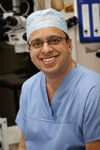
Mr A Ahmed
MB ChB, MRCS, FRCS (ORL-HNS)Mr Ahmed has trained as an ENT Surgeon with subsequent Fellowship training in Facial Plastic & Reconstructive Surgery in America and Europe.




EAFPS
European Academy Fellowship of Facial Plastic and Reconstructive Surgery
RCSEd
Fellow of the Royal College of Surgeons of Edinburgh
ENT UK
The professional membership body promoting excellence in ENT
Book my Consultation

Book a consultation now, fill in your details and we’ll call you back. Start discovering your true self today.
Our opening hours are Monday to Friday 9am-7pm.
- Get to know Mr Ahmed
- All your questions answered
- Get procedures recommendations
- Get advice on next steps
Facial Plastic Surgeon Nottingham – The Park Hospital
The Park HospitalSherwood Lodge Drive
Burntstump Country Park
NG5 8RX Find out more
Facial Plastic Surgeon Nottingham – Woodthorpe Hospital
Woodthorpe Hospital748 Mansfield Road
Nottingham
NG5 3FZ Find out more