Open Rhinoplasty
Open rhinoplasty is a surgical procedure that reshapes the nose using a small incision across the columella, the strip of tissue between the nostrils, in addition to incisions inside the nose. This approach lifts the skin to fully expose the underlying cartilage and bone, giving the surgeon direct visibility and greater precision when reshaping the nasal structure.
Mr Aftab Ahmed performs open rhinoplasty for patients suffering from a crooked or asymmetric nose, a dorsal hump and breathing difficulties in cosmetic clinics in Nottingham and Doncaster.
What is Open Rhinoplasty?
Open rhinoplasty is a sophisticated surgical technique favoured for its unparalleled accuracy. Unlike "closed" surgery, which is performed entirely through the nostrils, the open approach involves a discreet transcolumellar incision, a small, inverted-V-shaped cut made across the narrow strip of tissue between your nostrils.
By gently lifting the nasal skin, Mr Ahmed gains a direct, clear view of the underlying nasal framework. This "open" access is the gold standard for achieving high-level detail, particularly when refining the nasal tip, straightening a deviated bridge, or performing complex revision surgery.
Why Choose the Open Approach?
Your nose is the central feature of your face, and even a millimetre of change can make a significant impact. Mr Ahmed specialises in the open approach because it offers:
- Unrivalled Visibility: Direct visualisation allows for a precise diagnosis of your nasal anatomy, ensuring no underlying structural issues are overlooked.
- Structural Integrity: By using structural grafts (like spreader grafts or columellar struts), Mr Ahmed can reinforce the nasal "scaffolding," ensuring your nose remains strong and functionally sound for years to come.
- Artistic Precision: This method allows for delicate tip refinement, enabling Mr Ahmed to narrow a bulbous tip or correct asymmetry with total visual control.
Why is the Closed Approach Highly Valued?
The popularity of the closed technique stems from its "minimally disruptive" nature. Mr Ahmed advocates for this method in specific cases because it aligns with a preservation-focused philosophy:
- The "Invisible Scar" Promise: Because every incision is tucked inside the nostril, there is zero external scarring. This is the primary driver for patients who are concerned about the "tell-tale" mark of a transcolumellar incision.
- The Recovery Speed Advantage: This technique preserves the natural bridge of skin and the majority of the nose’s lymphatic drainage. Consequently, patients often experience significantly less post-operative oedema (swelling) and a much faster resolution of bruising than with open surgery.
- The Limitation Clause (Expert Transparency): It is important to acknowledge that the closed approach provides the surgeon with a "limited window." Mr Ahmed effectively utilises this for refining the bridge or making minor tip adjustments. However, if your goals require significant structural rebuilding or complex revision work, he will honestly advise if an Open approach is necessary to guarantee a stable, long-term result.
Is Open Rhinoplasty Right for You?
While every patient is unique, the open approach is particularly effective for addressing complex anatomical concerns. You may be an ideal candidate for this technique if you require:
- Refining Tip Deformities: Addressing concerns such as a bulbous, asymmetric, or drooping (ptotic) tip.
- Revision (Secondary) Rhinoplasty: Correcting issues from a previous surgery where internal structural supports may be scarred or missing.
- Ethnic Rhinoplasty: Enhancing projection and providing necessary support for the nasal framework while respecting your unique heritage.
- Complex Structural Correction: Straightening a severely crooked nose or repairing congenital concerns to restore both form and function.
The Consultation Process in South Yorkshire & Nottinghamshire
Before any surgical intervention, Mr Aftab Ahmed conducts a comprehensive facial analysis to ensure your aesthetic goals align with functional breathing requirements. This face-to-face assessment is available at Park Hill Hospital (Doncaster), as well as The Park Hospital and Woodthorpe Hospital (Nottingham).
- Clinical Evaluation: Mr Ahmed reviews your nasal anatomy, skin thickness, and previous surgical history (if applicable) to determine the best approach for your unique features.
- Functional Diagnostics: We assess the internal valves and septum to ensure the "Open" approach supports and improves clear airflow.
- Digital Visualisation: Using high-resolution photography, we discuss potential outcomes, allowing you to see how structural changes to the bridge or tip will balance your profile before you commit to surgery.
The Open Rhinoplasty Procedure: Step-by-Step
Mr Ahmed performs every procedure with meticulous care, combining medical expertise with an artistic eye for facial harmony.
- Preparation & Anaesthesia: The procedure is performed under general anaesthesia at our specialist hospitals, ensuring your total comfort.
- The Precision Incision: A small incision is made across the columella and connected to internal incisions.
- Elevation: Using specialised dissectors and retractors, the nasal skin is elevated to reveal the cartilage and bone.
- Reshaping the Framework:
- The Bridge: If reducing a hump, Mr Ahmed uses a fine osteotome (a precise surgical chisel) or specialist rasps to smooth the profile.
- The Tip: Using precision forceps and fine sutures, the tip cartilages are reshaped. If extra support is needed, a columellar strut is inserted.
- Refining the Airway: If you suffer from breathing issues, the septum is straightened, and spreader grafts may be placed to support the internal nasal valves.
- Closure: The skin is redraped, and the columellar incision is closed with interrupted fine-gauge sutures, strategically hidden in the natural shadows of the nose.
What Can Open Rhinoplasty Change? A Nose Anatomy Guide
Open rhinoplasty allows for precise, structural changes across multiple areas of the nose. By gently lifting the nasal skin. While every procedure is tailored, the nasal tip and overall profile (dorsum) are typically the most significant focus in open rhinoplasty, as these areas have the greatest impact on both appearance and structural support. Here’s how each area can be addressed:
The Bridge (Nasal Bones)
The upper part of the nose that defines your profile. It can be smoothed, straightened, or refined to correct a hump or asymmetry.
The Dorsum (Nasal Profile Line)
Extending from the bridge to the tip, this area can be reshaped to create a straighter, more balanced contour.
The Tip (Cartilage Structure)
One of the most complex areas. Open rhinoplasty allows for precise tip refinement, including narrowing, lifting, correcting asymmetry, and adding structural support with grafts.
The Septum (Internal Structure)
The internal wall of the nose can be straightened to improve breathing, while also providing cartilage for structural support.
The Nostrils (Nasal Openings)
Subtle adjustments can improve symmetry and ensure the nostrils are proportionate to the rest of the nose.
The Alar Base (Nasal Width)
This area can be refined to reduce nostril width while maintaining natural facial harmony.
The Nasolabial Angle (Profile Detail)
The angle between the nose and upper lip can be adjusted to enhance facial balance and refine the side profile.
Recovery Timeline: Your Path to Healing
Recovery from open rhinoplasty is a journey of gradual refinement. While you will see an immediate change, the final details emerge as the skin "settles" over your new nasal structure.
The table below shows the recovery timeline from an open rhinoplasty procedure.
Phase
Timeframe
What to Expect
Initial Healing
Days 1–7
You will wear a protective external splint. Rest at home with your head elevated.
The Reveal
Days 7–10
Mr Ahmed removes your splint and sutures. Most bruising begins to fade during this week.
Returning to Routine
Weeks 2–4
Most patients return to work and light social activities as the "surgical look" disappears.
Intermediate
Months 3–6
Approximately 80% of swelling has resolved. Your new profile is clear and firm.
Final Result
12 Months
The skin has fully "shrink-wrapped" to the new framework, revealing the final, refined result.
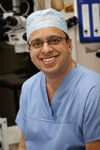
Mr A Ahmed
MB ChB, MRCS, FRCS (ORL-HNS)Mr Ahmed has trained as an ENT Surgeon with subsequent Fellowship training in Facial Plastic & Reconstructive Surgery in America and Europe.




EAFPS
European Academy Fellowship of Facial Plastic and Reconstructive Surgery
RCSEd
Fellow of the Royal College of Surgeons of Edinburgh
ENT UK
The professional membership body promoting excellence in ENT
Book my Consultation

Book a consultation now, fill in your details and we’ll call you back. Start discovering your true self today.
Our opening hours are Monday to Friday 9am-7pm.
- Get to know Mr Ahmed
- All your questions answered
- Get procedures recommendations
- Get advice on next steps
Facial Plastic Surgeon Nottingham – The Park Hospital
The Park HospitalSherwood Lodge Drive
Burntstump Country Park
NG5 8RX Find out more
Facial Plastic Surgeon Nottingham – Woodthorpe Hospital
Woodthorpe Hospital748 Mansfield Road
Nottingham
NG5 3FZ Find out more