Revision Rhinoplasty
Revision rhinoplasty rhinoplasty is a corrective surgical procedure for patients who are unhappy with the results of a previous nose surgery, or who have developed breathing problems as a result of it. The surgeon assesses the underlying cause, which may involve scar tissue, weakened cartilage support, or over-removal of structure during the original procedure, and plans a tailored approach to restore both form and function.
Mr Aftab Ahmed performs revision rhinoplasty for patients suffering from nasal asymmetry, breathing difficulties and dissatisfaction with a previous nose surgery in cosmetic clinics in Nottingham and Doncaster.
What is Revision Rhinoplasty?
Revision rhinoplasty, also known as secondary rhinoplasty, is a corrective surgical procedure performed on a nose that has undergone previous surgery. Unlike a primary "nose job," which works with untouched anatomy, a revision focuses on restoring both the aesthetic appearance and the internal breathing function that may have been compromised during a previous operation.
Because the original nasal framework has been altered, Mr Ahmed must navigate existing scar tissue to rebuild the nose's support system. This often involves more than just "refining" the shape; it is an architectural challenge that frequently requires the use of cartilage grafts to replace missing or weakened tissue.
Whether you are seeking to correct a minor contour irregularity or require a total structural reconstruction, revision rhinoplasty is a bespoke journey toward a nose that looks natural and breathes freely.
Why Revision is More Complex Than Primary Rhinoplasty
Correcting a previous surgery is fundamentally different from a first-time procedure. Mr Ahmed approaches every revision case with extreme care, navigating the unique challenges of secondary surgery:
- Altered Anatomy: Surgeons must navigate scar tissue (fibrosis), which is less pliable than healthy tissue and often obliterates the natural planes Mr Ahmed would typically follow.
- Tissue Limitations: Previous procedures can leave the nose with weakened cartilage or a structurally depleted framework, requiring a "rebuilding" phase rather than just reshaping.
- Increased Operative Time: Due to the meticulous dissection required to safely navigate internal scarring, revision procedures often take 3.5 to 4 hours, compared to the 2 hours typical of primary cases.
- Reduced Blood Supply: Previous incisions can compromise vascular pathways. Mr Ahmed uses advanced techniques to protect the skin’s blood supply and ensure healthy healing.
Common Indications for Seeking Revision
Patients typically seek Mr Ahmed’s expertise in Doncaster and Nottingham for two primary reasons:
1. Functional Issues
- Nasal Valve Collapse: Internal or external collapse that severely restricts airflow.
- Persistent Obstruction: New-onset breathing difficulties or whistling caused by a septal perforation.
2. Aesthetic Deformities
- Inverted V Deformity: A mid-vault collapse creating a visible "V" shape on the bridge.
- Saddle Nose: A "scooped" or sunken bridge caused by a loss of internal support.
- Polly Beak Deformity: A convex protrusion just above the tip.
- Pinched Tip: Often the result of over-resection of cartilage in a previous surgery.
The Role of Cartilage Grafting (The "Architectural" Phase)
In revision surgery, the goal is often to replace missing structural support. Mr Ahmed utilises specific donor sources to reinforce the nasal framework:
- Why Grafts are Necessary: To provide the "scaffolding" required to lift a collapsed bridge or support a pinched tip.
- Septal Cartilage: The preferred source, though often depleted during the first surgery.
- Ear (Conchal) Cartilage: Pliable and curved; excellent for tip definition, though it lacks the rigidity needed for major bridge support.
- Rib (Costal) Cartilage: The "gold standard" for major reconstructions. Rib cartilage provides abundant, strong material to rebuild a severely compromised nose.
The Consultation Process
- Surgical Audit: A review of your previous operative notes (if available) to understand what was changed during your first surgery.
- Physical Palpation: Mr Ahmed carefully feels the nasal structure to assess the strength of the remaining cartilage and the thickness of the skin.
- Realistic Goal Setting: Using digital imaging, we discuss what can be realistically achieved, prioritising structural stability and improved breathing.
The Revision Rhinoplasty Procedure: Step-by-Step
- Preparation: Performed under general anaesthesia. Due to the complexity, the open approach is almost always preferred for revision cases to allow for full visibility.
- Dissection: Mr Ahmed slowly separates the skin from the underlying scar tissue using fine-point dissectors.
- Graft Harvesting: If rib or ear cartilage is required, it is harvested at the start of the procedure.
- Rebuilding the Framework: Using precision rasps and fine sutures, Mr Ahmed integrates the new grafts to "re-set" the bridge and tip.
- Refining the Airway: Any internal obstructions or septal issues are corrected to ensure the nose functions as well as it looks.
- Closure: The skin is redraped and closed with microscopic sutures.
What Can Revision Rhinoplasty Change? A Restoration Guide
Unlike a primary procedure, revision rhinoplasty is often a task of reconstruction. Mr Ahmed focuses on restoring the structural integrity of the nose while correcting aesthetic imbalances. By navigating existing scar tissue, he can address the following key anatomical areas:
The Bridge (Structural Support): If a previous surgery resulted in a "saddle nose" (a sunken bridge) or an uneven profile, Mr Ahmed can rebuild this area. Using spreader grafts or dorsal onlay grafts, he restores a strong, straight, and natural-looking bridge.
The Middle Vault (Inverted V Correction): A common issue in revision cases is the collapse of the middle third of the nose. Mr Ahmed uses spreader grafts to widen this area, correcting the "Inverted V" deformity and significantly improving internal airflow.
The Nasal Tip (Projecting & Contouring): If the tip appears "pinched," "drooping," or "knobby" due to over-reduction of cartilage, Mr Ahmed can reconstruct it. Using tip grafts and columellar struts, he restores proper projection, symmetry, and a refined shape.
The Septum & Internal Airway: Revision surgery often addresses a "perforated septum" or persistent internal deviations. Mr Ahmed prioritises the functional repair of the internal valves to resolve chronic breathing obstructions.
The Supratip (Correcting the "Polly Beak"): If a previous surgeon left too much cartilage or scar tissue just above the tip, it can create a bird-like protrusion. Mr Ahmed meticulously thins this tissue to create a smooth, elegant transition from the bridge to the tip.
The Alar Base (Nostril Symmetry): Previous surgeries can sometimes leave the nostrils appearing asymmetrical or retracted. Mr Ahmed can use alar rim grafts to support the nostril edges, ensuring they are even and proportionate to the rest of the face.
Nasal Length: In cases where the nose was "over-shortened" (creating a pig-like appearance), Mr Ahmed can use septal extension grafts to subtly lengthen the nose and restore a more natural, balanced profile.
Recovery Timeline: Your Path to Restoration
Recovery from revision surgery is often longer than a primary procedure, as the tissues require more time to settle.
Phase
Timeframe
What to Expect
Initial Healing
Days 1–10
A protective splint is worn. Swelling is more pronounced than a primary procedure.
Splint Removal
Day 10
Mr Ahmed removes the splint. The nose will look "full" due to oedema.
Early Maturation
Months 1–3
The majority of the bruising fades, but the nasal tip remains firm.
The Long-Term
12–18 Months
Because of the scar tissue, it can take up to 18 months for the final, refined result to be fully visible.
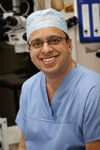
Mr A Ahmed
MB ChB, MRCS, FRCS (ORL-HNS)Mr Ahmed has trained as an ENT Surgeon with subsequent Fellowship training in Facial Plastic & Reconstructive Surgery in America and Europe.




EAFPS
European Academy Fellowship of Facial Plastic and Reconstructive Surgery
RCSEd
Fellow of the Royal College of Surgeons of Edinburgh
ENT UK
The professional membership body promoting excellence in ENT
Book my Consultation

Book a consultation now, fill in your details and we’ll call you back. Start discovering your true self today.
Our opening hours are Monday to Friday 9am-7pm.
- Get to know Mr Ahmed
- All your questions answered
- Get procedures recommendations
- Get advice on next steps
Facial Plastic Surgeon Nottingham – The Park Hospital
The Park HospitalSherwood Lodge Drive
Burntstump Country Park
NG5 8RX Find out more
Facial Plastic Surgeon Nottingham – Woodthorpe Hospital
Woodthorpe Hospital748 Mansfield Road
Nottingham
NG5 3FZ Find out more